

Goal Architecture: Building Goals the Way Our Brains Learn
As someone who spent more than a decade in school and a lifetime in sport, the lead-up to September has always felt like a fresh start.
Every fall, athletes are either setting goals like making the team, winning a championship, or earning a scholarship, or they are reflecting on the end of the season and have begun to prepare for next year. These goals matter because they give us direction and reflect the experiences we hope to have, but they are only part of the picture.
Outcomes are often weeks or months away, influenced by countless factors outside our control, and provide relatively infrequent feedback about whether we're moving in the right direction. From a neuroscience perspective, that's an inefficient way to support learning. Learning depends on feedback. The more frequent and specific the feedback, the more opportunities the brain has to update its predictions, refine behaviour, and improve future performance.
The brain adapts through continuous cycles of prediction, feedback, and adjustment. Every movement, every decision, and every repetition provides information that can help refine future performance. This process unfolds continuously, often in fractions of a second. When our goals provide only delayed or infrequent feedback, they fail to capitalize on the way the brain naturally learns.
Given that's how our brains learn and perform, shouldn't our goals capitalize on that biology?
Outcome-based goals serve an important purpose: they give us a destination. The problem is that they don't provide the blueprint for how to get there.
Instead of relying on an outcome goal, I encourage athletes to build their goal architecture. Like any well-designed structure, each component serves a different purpose and together they create the conditions that make the outcome more likely.
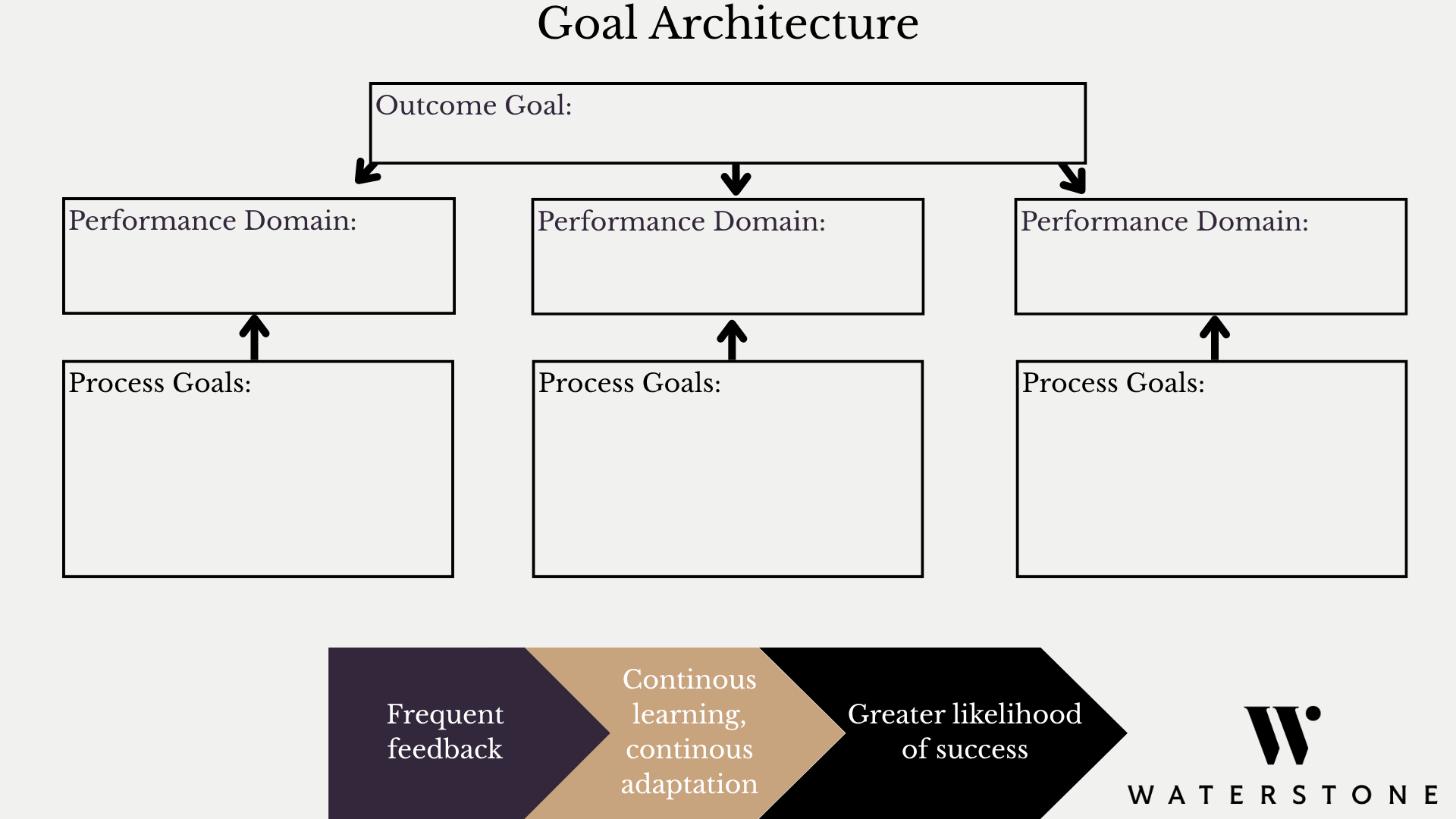
Figure 1. The Goal Architecture Framework. Outcome goals identify the destination, while performance domains and process goals provide the structure through which learning, adaptation, and performance occur. Frequent opportunities for feedback allow the brain to continually refine behaviour, increasing the likelihood of achieving the desired outcome. Click image to download pdf version.
At the centre sits the outcome: making the team, earning a starting position, qualifying for tours, matching to residency, or landing the job. Around that outcome are the domains that make success possible. Depending on your sport or profession, those domains might include technical skill, physical preparation, tactical understanding, psychological skills, recovery, communication, leadership, or lifestyle habits.
Once those domains have been identified, each can be translated into specific process goals—the daily and weekly behaviours that move you toward the larger objective.
For example, "make the team" isn't something your brain can directly execute. Completing your pre-performance routine before every practice is. Resetting after mistakes is. Consistently communicating with teammates and coaches is. Arriving well-rested and prepared is.
Breaking a complex goal into its component parts creates frequent opportunities for feedback. Rather than waiting months to discover whether you've achieved your outcome, your brain receives hundreds of opportunities each week to evaluate performance, adjust behaviour, and strengthen the habits that matter most.
This approach also changes the psychological experience of pursuing a goal. Instead of feeling at the mercy of selection decisions, rankings, or results, your attention shifts toward variables you can directly influence. Progress becomes visible long before the final outcome is known, making it easier to sustain motivation when setbacks occur and to remain open to feedback because we know it’s a tool for improvement rather than a marker of our success or failure.
Angela Duckworth describes grit as the sustained pursuit of long-term goals. I would expand on that by suggesting that one of the reasons gritty people persist is that they don't wait for distant outcomes to tell them whether they're succeeding. They build systems that generate meaningful feedback every day.
Professionals aren't distinguished by their ability to pursue a goal without changing course. They're distinguished by their ability to continually adjust their behaviour while remaining committed to the destination.
As you prepare for this season, keep your outcome goal. Let it provide direction, but recognize that adding process goals creates a more robust training environment and, ultimately, makes you better prepared to achieve the outcome you're pursuing.
Take the time to identify the behaviours that will get you there and the specific actions required to develop them. Build goals that allow your brain to learn, adapt, and improve every day, regardless of whether it's on the field of play or not. This creates a framework that keeps motivation consistent, feedback frequent, and progress front and centre. These conditions greatly increase the likelihood of earning the opportunity you are pursuing, whether that's a spot on the team, a position in the boardroom, or a place on the unit.
Championships, roster spots, scholarships, and careers are the cumulative product of thousands of predictions, adjustments, and repetitions that, over time, shape both the person and the brain that got them there.
Our lives are shaped by the habits we build. Process goals don't simply improve the likelihood of achieving our outcome goals—they shape the person capable of sustaining them.
Goal Architecture in Practice.
To illustrate how this framework works, I've included a completed example using one of my own current goals. Although this example focuses on training my dog, Rudy, as a therapy dog, the same approach can be applied to athletic performance, career development, education, or any other long-term pursuit.
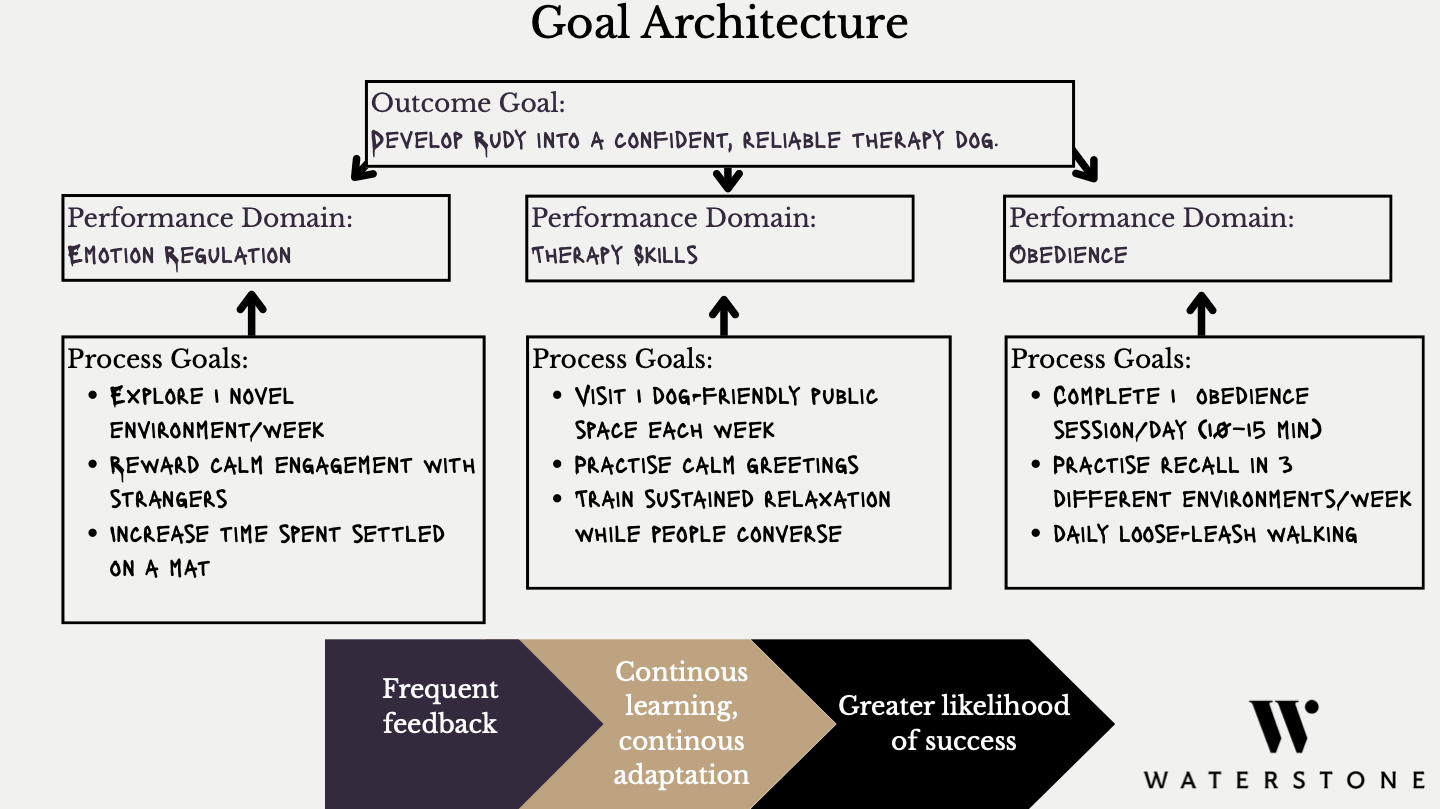
Figure 2. A concrete example of how the Goal Architecture Model can be used to translate a complex outcome into meaningful performance domains and actionable process goals.